
Paediatric PCD Pharma Franchise
Updated By Glenvox Biotech 11 min read
- Paediatric PCD Pharma Franchise: Why Dosage Form Decides This Segment – Glenvox Biotech
- What Is a Paediatric PCD Pharma Franchise?
- Why Dosage Form Matters in Paediatric Medicines
- Key Dosage Forms in a Paediatric PCD Pharma Franchise
- Dosage Form and Age Considerations
- Why Product Variety Matters to a Franchise Partner
- Quality, Manufacturing, and Packaging Considerations
- What to Look for in a Paediatric PCD Pharma Franchise
- Why Glenvox Biotech Can Be Evaluated on Product Portfolio and Support
- Frequently Asked Questions (FAQs)
- Why are dosage forms more critical in pediatric pharma than adult pharma?
- What is the role of Dry Syrups in a Paediatric PCD Pharma Franchise?
- Which paediatric dosage forms are best suited for infants under 12 months?
- What promotional and marketing support do paediatric franchise partners receive?
- How do quality standards like WHO-GMP apply to paediatric medicine ranges?
- Conclusion
Paediatric PCD Pharma Franchise: Why Dosage Form Decides This Segment – Glenvox Biotech
Selecting the right commercial model in pharmaceutical distribution requires a deep understanding of patient demographics, clinical usability, and supply dynamics. When entrepreneurs evaluate a Paediatric PCD Pharma Franchise, they quickly realize that success in this market is not determined solely by the number of molecules listed in a product catalog. Instead, the real foundation of pediatric healthcare lies in formulation design, patient acceptability, and ease of administration.
The pediatric population is distinct from adult patient groups. Children vary significantly in their physical development, ability to swallow solid oral medications, metabolic handling, and taste sensitivity. Consequently, a Paediatric PCD Pharma Franchise relies heavily on offering appropriate dosage forms that allow caregivers to administer medication accurately without distress to the child. Distributors and healthcare marketing associates looking to partner with established companies like Glenvox Biotech must evaluate how a portfolio balances syrups, drops, dry reconstitutable powders, and specialized solid oral formulations to meet diverse clinical preferences.
What Is a Paediatric PCD Pharma Franchise?
A Paediatric PCD Pharma Franchise is a commercial distribution arrangement under the Propaganda Cum Distribution (PCD) model, focused specifically on medications formulated for infants, toddlers, children, and adolescents. Under this business model, a parent pharmaceutical company manufactures, packages, and handles quality testing for pediatric formulations, while granting regional distribution and marketing rights to a local franchise partner.
The franchise associate acts as the field presence, introducing these pediatric products to general practitioners, pediatricians, clinics, hospitals, and retail pharmacies within an assigned geographical territory. For individuals entering the pharmaceutical distribution sector, investing in a Paediatric PCD Pharma Franchise offers a structured route into healthcare without the enormous capital requirements of establishing a manufacturing facility. However, because children are a sensitive patient demographic, operating a successful Paediatric Pharma Franchise demands heightened attention to dosage form suitability, clear product labeling, and consistent supply reliability.
Why Dosage Form Matters in Paediatric Medicines
In adult medicine, a standard tablet or capsule is often sufficient for a vast majority of therapeutic needs. In pediatric care, however, the dosage form itself can determine whether a treatment is successfully delivered or rejected.
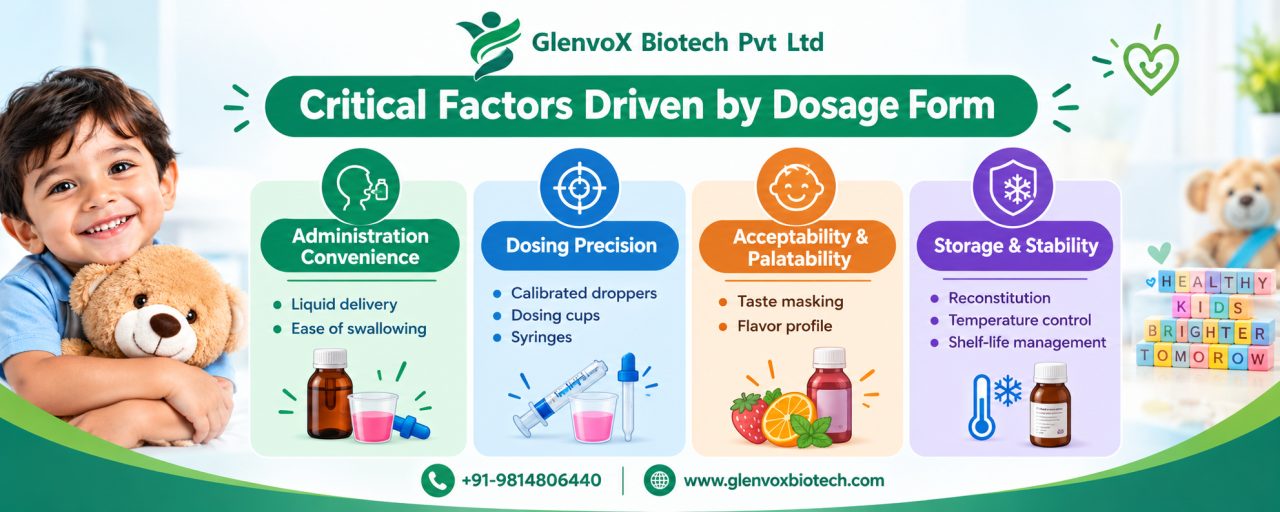
When evaluating a Paediatric PCD Pharma Franchise, understanding these formulation dynamics is key:
- Administration Convenience: Young children, especially infants and toddlers, lack the physiological ability to swallow solid oral dosage forms safely. Liquid suspensions, drops, and reconstitutable syrups facilitate smooth administration.
- Dosing Accuracy & Precision: Children require precise, weight-based dosing rather than fixed adult quantities. Dosage forms accompanied by calibrated measuring cups, droppers, or oral syringes ensure caregivers deliver exact amounts.
- Palatability & Patient Acceptance: Children often refuse bitter or unpalatable medications. Proper taste-masking technology, flavor selection, and oral liquid design directly influence caregiver compliance and treatment completion.
- Product Handling & Storage: Certain pediatric formulations, such as dry syrups requiring water for reconstitution, have specific stability windows after preparation. Clear caregiver instructions on product packaging are essential.
Dosage form selection is not a cosmetic choice or a mere packaging preference; it is a core structural component of pediatric product design. A well-curated Paediatric PCD Pharma Franchise portfolio takes these factors into account across its entire product lineup.
Key Dosage Forms in a Paediatric PCD Pharma Franchise
A comprehensive Paediatric Medicine Range must cover multiple administration routes and liquid concentrations to serve varying age groups.
Paediatric Syrups and Oral Liquids
Oral liquids and Syrups remain among the most widely prescribed dosage forms within a Paediatric PCD Pharma Franchise. Formulated as clear solutions or homogeneous suspensions, oral liquids allow healthcare professionals to adjust doses based on a child’s weight.
For franchise partners, offering quality Paediatric Syrups requires paying close attention to bottle packaging, seal integrity, and included measuring devices. Clear volumetric markings on caps or syringes prevent accidental under- or over-dosing by caregivers.
Drops
Concentrated oral Paediatric Drops are specifically designed for infants and younger toddlers. Because infants consume small liquid volumes per feed, drops deliver the necessary active pharmaceutical ingredient in minimal volumes—often measured in fractions of a milliliter.
In a Paediatric PCD Pharma Franchise portfolio, drops are widely used for infant vitamin supplements, digestive drops, antipyretics, and pediatric pain management. Packaging for drops typically incorporates calibrated droppers to facilitate precise administration directly into an infant’s mouth or mixed into small feeds as directed by healthcare professional instructions.
Dry Syrups
Certain active ingredients, particularly specific antibiotics, are susceptible to degradation when stored in liquid form for extended periods. To maintain chemical stability and therapeutic potency throughout the supply chain, these formulations are produced as dry powders for oral suspension, commonly referred to as Dry Syrups.
A Paediatric PCD Pharma Franchise portfolio relies heavily on Dry Syrups for pediatric anti-infective formulations. These products require reconstitution with sterile or boiled-and-cooled water prior to use. Clear packaging instructions, prominent fill-line indicators on bottles, and detailed stability guidance (such as shelf-life after reconstitution and storage conditions) are mandatory to support safe home use by caregivers.
Paediatric Tablets
While traditional Tablets are unsuitable for infants, specialized solid oral dosage forms play a role for older children who have developed proper swallowing abilities. A Paediatric PCD Pharma Franchise may include dispersible tablets, chewable tablets, or small-sized coated tablets where clinically appropriate.
Dispersible tablets dissolve rapidly in a small quantity of water or milk, offering an alternative for children who struggle with solid tablets but can consume a small liquid volume. Chewable tablets are often utilized for nutritional supplements or deworming formulations in older pediatric age groups. Any alteration or administration method of Paediatric Tablets should always follow approved product labeling and professional guidance.
Paediatric Capsules
The inclusion of Paediatric Capsules in a Paediatric Pharma Franchise portfolio is typically reserved for older children and adolescents whose swallowing capabilities mirror those of adults. In specific cases, micro-pelleted capsules or softgel formulations are designed for specific absorption profiles or nutritional oil supplements.
Suitability for capsules depends heavily on child age, developmental stage, and professional evaluation. Franchise partners should view capsules as a complementary segment within a broad Paediatric PCD Franchise catalog rather than a primary formulation for younger age groups.
Other Paediatric Formulations
Depending on a pharmaceutical company’s technical capabilities, a Paediatric PCD Pharma Franchise may also include additional specialized dosage forms. These can range from topical ointments and creams for pediatric skin conditions to nasal drops, rehydration salts (ORS), and sterile liquid injectables for acute clinical settings. Product availability across these secondary categories varies between suppliers.
Dosage Form and Age Considerations
The pediatric population spans several distinct developmental stages, each with unique physiological characteristics and administration requirements:
| Age/Developmental Group | Preferred Primary Dosage Forms | Key Administration & Packaging Considerations |
| Infants (0 – 12 months) | Paediatric Drops, Oral Concentrates | Low liquid volumes, calibrated dropper assemblies, precise weight-based dosing. |
| Toddlers (1 – 3 years) | Paediatric Syrups, Dry Syrups | Palatable flavors, spill-resistant liquids, clear measuring cups. |
| Young Children (4 – 8 years) | Syrups, Dispersible Paediatric Tablets | Easy-to-swallow liquids, rapid-dissolving oral solids, clear volume markings. |
| Older Children & Adolescents | Chewables, Dispersible Tablets, Paediatric Capsules | Transition to solid oral formats under professional guidance and supervision. |
A successful Paediatric PCD Pharma Franchise ensures that its product range covers this entire spectrum, enabling healthcare providers to prescribe age-appropriate formulations for every stage of childhood. Healthcare professionals and approved product literature should always guide final medicine selection and administration.
Why Product Variety Matters to a Franchise Partner
For an entrepreneur operating a Paediatric PCD Pharma Franchise, offering a wide selection of dosage forms provides tangible commercial advantages:

- Enhanced Prescriber Flexibility: Pediatricians frequently tailor medication formats to a child’s specific age and illness severity. A multi-dosage-form catalog allows the medical representative to fulfill diverse prescription preferences.
- Broader Market Reach: Having access to Paediatric Drops, Paediatric Syrups, and Dry Syrups allows franchise associates to supply both primary care pediatric clinics and retail chemist outlets.
- Commercial Portfolio Balance: A balanced mix of daily nutritional supplements and acute therapeutic formulations creates consistent year-round order cycles for a Pharmaceutical Franchise Business.
Maintaining a broad Paediatric Medicine Range allows a distribution partner to build stronger relationships with prescribers, who appreciate having access to high-quality formulations across multiple delivery formats.
Quality, Manufacturing, and Packaging Considerations
Given that pediatric medications are administered to developing bodies, quality assurance and packaging controls are paramount. When evaluating a Paediatric PCD Pharma Franchise, franchise associates should verify that their manufacturing partners adhere to recognized industry standards.
Key quality parameters include:
- Good Manufacturing Practices (GMP): Ensuring that formulations are consistently produced under clean, controlled environments to prevent contamination or batch variations.
- Quality Control Systems: ISO-aligned management systems that oversee raw material testing, active pharmaceutical ingredient (API) assay purity, and finished batch release protocols.
- Protective Packaging Standards: High-grade amber glass or PET bottles that shield liquid formulations from light-induced degradation, alongside tamper-evident closures.
- Accurate Labeling & Markings: Clear, legible print detailing batch numbers, manufacturing/expiry dates, reconstitution guidelines, and storage conditions.
Partnering with professional companies like Glenvox Biotech helps ensure that Child Care Pharma Products meet rigorous operational standards, giving franchise partners confidence when detailing products to healthcare professionals.
What to Look for in a Paediatric PCD Pharma Franchise
Before entering into a commercial agreement for a Paediatric PCD Pharma Franchise, entrepreneurs should review this practical evaluation checklist:
- Dosage Form Diversity: Does the portfolio include a balanced mix of Paediatric Syrups, Paediatric Drops, Dry Syrups, and dispersible Paediatric Tablets?
- Packaging Appeal & Safety: Are liquid products housed in leak-proof, child-resistant, or light-protective bottles with clear measuring devices?
- Product Documentation: Does the company provide complete price lists, Certificates of Analysis (COA), and batch technical details?
- Promotional Support: Are visual aids, product detailers, sample catch covers, and reminder cards available to assist field marketing?
- Supply Consistency: Does the company maintain stock availability to prevent inventory stockouts in your territory?
- Territory Policies: Are distribution boundaries clearly demarcated in the franchise agreement to prevent regional overlap?
Why Glenvox Biotech Can Be Evaluated on Product Portfolio and Support
When researching potential business partners for a Paediatric PCD Pharma Franchise, evaluating established firms like Glenvox Biotech provides a practical example of a structured pharmaceutical operations model.
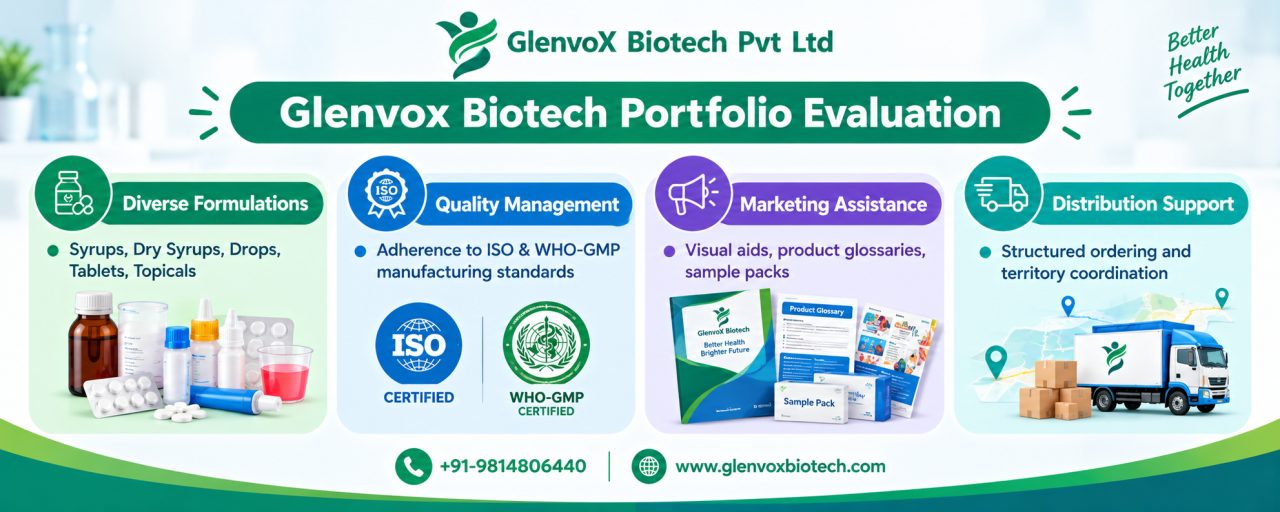
Key objective factors to consider when evaluating Glenvox Biotech include:
- Formulation Range: Availability of multiple pediatric delivery formats, including oral liquids, dry suspensions, drops, and topical products.
- Quality Framework: Operational alignment with WHO–GMP manufacturing standards and ISO quality-management systems.
- Promotional Inputs: Provision of visual aids, product glossaries, and promotional literature to assist field representatives during doctor visits.
- Business Communication: Transparent commercial pricing, structured dispatch procedures, and dedicated partner communication channels.
Evaluating these objective operational factors helps entrepreneurs select a Pharma Franchise Company that matches their regional business strategy.
Frequently Asked Questions (FAQs)
Why are dosage forms more critical in pediatric pharma than adult pharma?
Pediatric patients vary widely in swallowing abilities, taste sensitivity, and weight-based dosage needs. Adults generally tolerate standard solid tablets, but children require liquids, drops, or reconstitutable powders with precise calibrated measuring devices for safe administration.
What is the role of Dry Syrups in a Paediatric PCD Pharma Franchise?
Dry syrups store active ingredients (like antibiotics) as stable dry powders. Once reconstituted with water by the caregiver, they provide a temporary liquid suspension, ensuring therapeutic potency that liquid solutions cannot maintain over long storage periods.
Which paediatric dosage forms are best suited for infants under 12 months?
Infants rely almost exclusively on concentrated oral drops. Drops deliver precise weight-based active doses in minimal liquid volumes, administered via calibrated droppers directly into the infant’s mouth.
What promotional and marketing support do paediatric franchise partners receive?
Franchise partners typically receive visual aids, MR detailers, physician sample catch covers, reminder cards, product glossaries, and branded promotional gifts to effectively present products to pediatricians and clinic practitioners.
How do quality standards like WHO-GMP apply to paediatric medicine ranges?
WHO-GMP guidelines mandate stringent manufacturing hygiene, raw material testing, API assay accuracy, and contamination controls. These controls are especially vital in pediatric pharmaceuticals to protect developing immune systems.
Conclusion
Choosing to launch a Paediatric PCD Pharma Franchise requires a clear focus on how dosage forms impact patient compliance, dosing accuracy, and clinical acceptability. Unlike adult medicine segments, pediatric healthcare is defined by its delivery systems—where Paediatric Syrups, Paediatric Drops, Dry Syrups, and age-appropriate Paediatric Tablets dictate market acceptance.
By prioritizing dosage form variety, packaging quality, regulatory compliance, and robust promotional support, franchise associates can build a reputable distribution business. Partnering with structured organizations like Glenvox Biotech provides the operational foundation, product diversity, and business support necessary to serve the growing pediatric healthcare market effectively.
- #Best PCD Franchise Business opportunity
- #Best pcd pharma franchise
- #Best PCD Pharma Franchise in India
- #Glenvox Biotech
- #Paediatric PCD Pharma Franchise
- #Paediatric PCD Pharma Franchise: Why Dosage Form Decides This Segment
- #Paediatric Pharma Products
- #Paediatric Pharmaceutical Products
- #pcd pharma franchise
- #Top pcd franchise in India
Interested in a PCD pharma franchise?
Check monopoly availability for your area today.